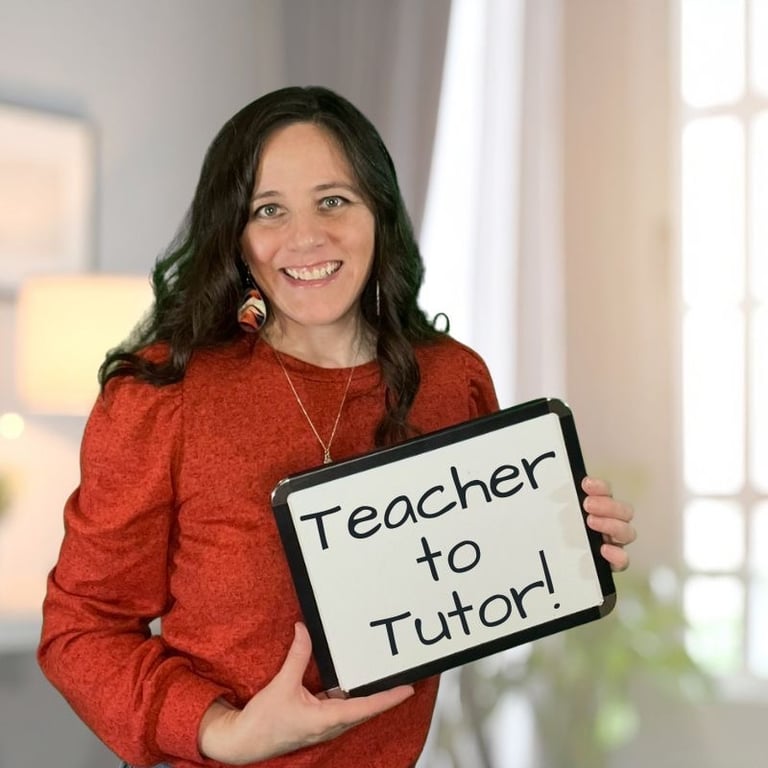
Meet the Founder of Small Town Scholars Dawn Dickey
How did Small Town Scholars Begin?

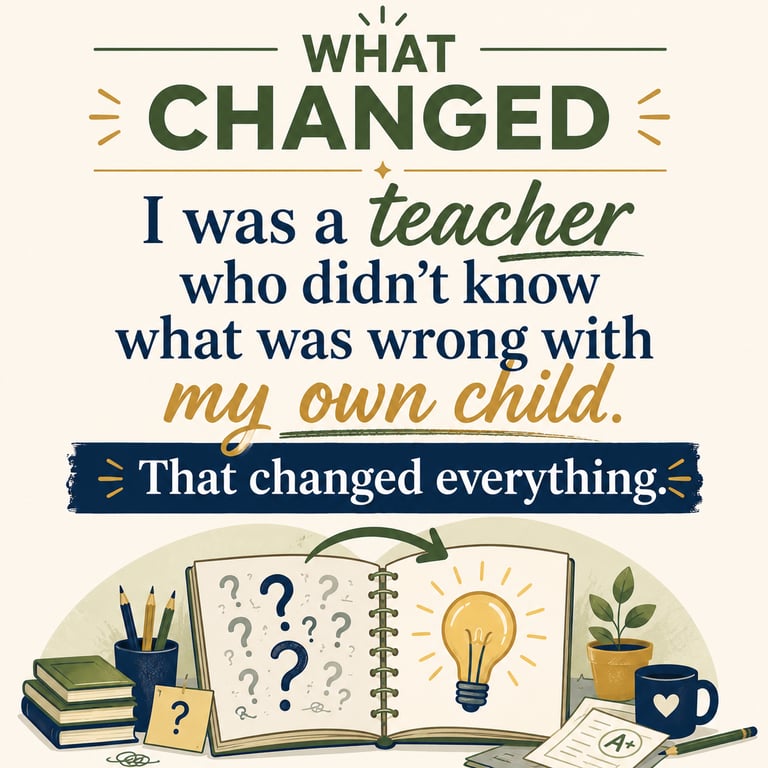
My third son was smart. I knew it. But he couldn't remember sight words no matter how many times we practiced. He struggled in reading in a way I couldn't explain — and I was a teacher. I was supposed to know.
I didn't know what was wrong. The school couldn't tell me. I didn't have a name for it yet, and honestly, I didn't care what they called it. My child was struggling and I didn't know how to help him.
So I made the decision a lot of small-town families understand: I moved. Not because I wanted to. Because I didn't have another option.
After we moved, my son was diagnosed with ADHD and dyslexia. A year later, my youngest son was also diagnosed with dyslexia. I learned everything I could — about how their brains worked, what actually helped, what the research said, and what the schools still weren't doing. I became the parent who asked every question and found every resource. That included Take Flight, the structured literacy program developed through Texas Scottish Rite Hospital for Children. I learned the program inside and out so I could reinforce it at home and support both of my sons through it. I have carried that knowledge into my work with students ever since.
My youngest son is now a cadet at the United States Air Force Academy.
That's not a brag. That's proof of what happens when a child gets the right support at the right time — and a parent who refuses to stop looking for it.
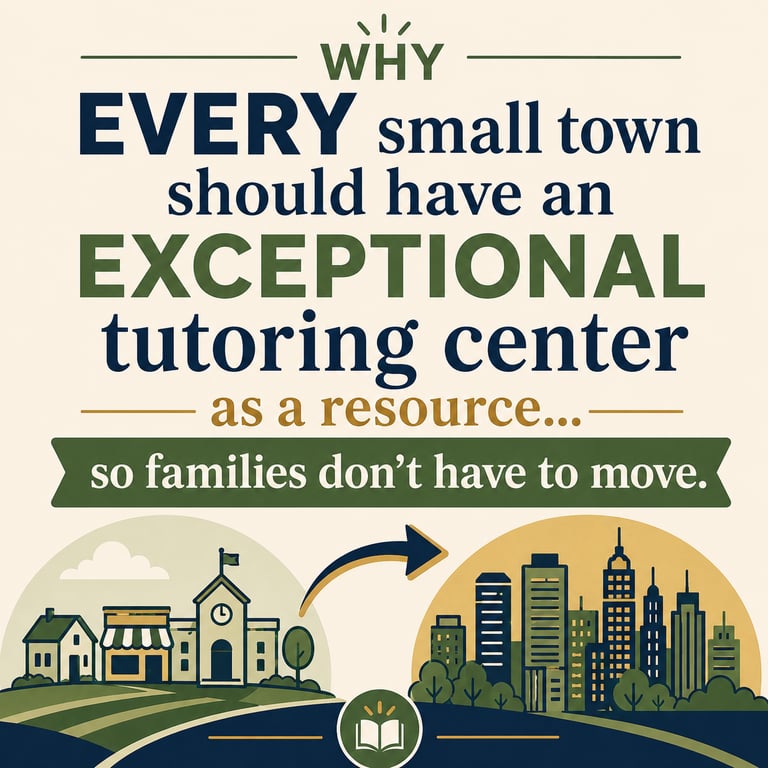
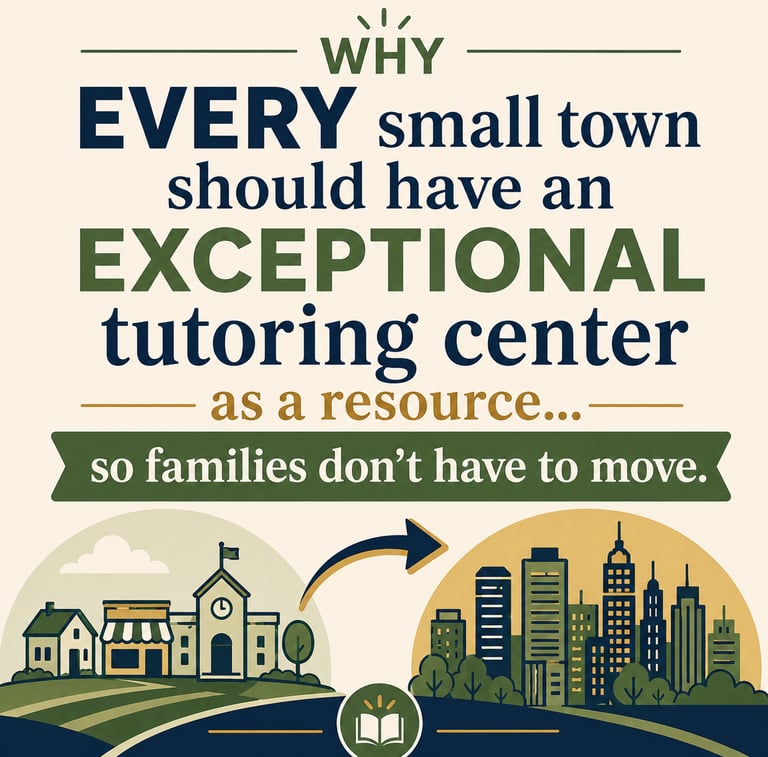
I came back to a small town — Crandall because there are families here right now doing what I did — wondering what's wrong, not getting answers, and not knowing where to turn. Small Town Scholars exists so they don't have to move to find out.
WHO I AM:
Texas educator.
15+ years in public schools.
I've taught in some of the most competitive and most under-resourced classrooms in the state — from Dallas ISD to Highland Park ISD, from science labs in Tyler to AP Bio & APES at Irving High School. The students in the under-resourced schools weren't less capable. They had fewer resources and less time with the right teacher. That gap is what I'm here to close.
I left public education in 2022 to do what I never could in a classroom of 32 students: actually reach every single kid.
Districts: Tyler ISD · Jacksonville ISD · Dallas ISD · Highland Park ISD · Irving ISD
Credentials & Experience
Education
Master of Business Administration (MBA)
— Western Governors University (2023)
M.S. Curriculum & Instruction (Science Education)
— UT Arlington (2017)
B.S. Interdisciplinary Studies (Early Childhood Education & English) — UT Tyler (2008)
SBEC Certifications
Principal EC–12 | ESL Supplemental EC–12
Special Education EC–12 | Generalist EC–4
Generalist 4–8 | Life Sciences 8–12 | Science 8–12
WHAT I BELIEVE
Multi-sensory approach to tutoring & learning
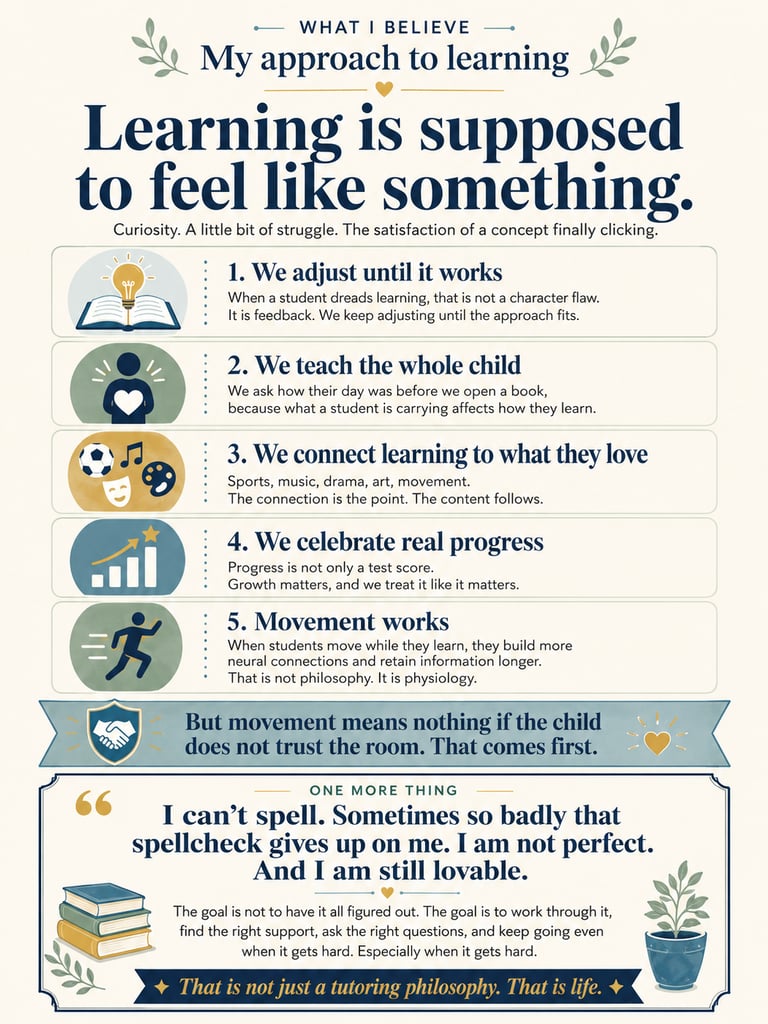
Learning is supposed to feel like something. Curiosity. A little bit of struggle. The satisfaction of a concept finally clicking. That experience — that's what we build toward in every session.
When a student dreads learning, that's not a character flaw. That's feedback. It's telling us the approach isn't right yet. We keep adjusting until it is.
I believe in the whole child — not just the gap we're closing. That means asking how their day was before we open a single book, because a student who is carrying something from third period cannot process new information until someone acknowledges it. The brain doesn't compartmentalize the way we wish it would.
It means connecting learning to whatever lights them up — sports, music, drama, art, movement. If a child loves football, we use football. If they love theatre, we use theatre. The connection is the point. The content follows.
It means cheering for them at their game on Friday, not just their grade on Monday. Progress is not only a test score. A student who was three grade levels behind and is now one level behind has done something remarkable. We treat it that way.
Movement is part of this — not because it's trendy, but because it works. When students move their bodies while they learn, they build more neural connections and retain information longer. That's not philosophy. That's physiology.
But the movement means nothing if the child doesn't trust the room. That comes first.

This year doesn't have to be another frustrating academic year.
For the first time, there's tutoring available right here in Crandall in Kaufman County.
The first step is one phone call.